


From Far Away Stars to The Core of Our Cells, know the #HerStoryofScience
Fabio Galiana & Ángeles Gallar

Wang Zhenyi 王贞仪 (China, 1768-1797), poet and astronomer, explained and calculated the movements of the equinox
She set up a round table in the garden gazebo, surrounded by blossoming cherry trees. «The table represents the Earth,» thought the young astronomer. A crystal lamp hung from the curved gazebo roof: «The Sun.» On one side of the table, a round mirror «like the Moon.» By rotating and positioning each of these three elements—the table, the lamp, and the mirror—Wang Zhenyi 王贞仪 (China, 1768-1797) conducted experiments to study solar and lunar eclipses, as well as the procession of the equinoxes.
Before artificial satellites, computers, and email, an astronomer had to devise ways to study the movements of the solar system on her own. And if, in addition to measuring celestial bodies, you manage to write thirteen poetry collections and a book on arithmetic before turning 29, then you’re a lot like Wang Zhenyi. «Aren’t you convinced daughters can be heroes, too?» asked the Qing dynasty scholar. Clearly, she was.

Source: University of California, Berkeley Art Museum and Pacific Film Archive; Gift of James Cahill.

Ida H. Hyde (USA, 1857-1945) physiologist, pioneer of cell recording
One of the essential things in life sciences, such as medicine or biology, is understanding what is going on inside a cell. We need to know how different chemical elements that makeup cells and elements entering and leaving cell membranes interact and generate small electric currents. One of the most important tools for cell research in the last 150 years is electrodes. There are several kinds of electrodes. Nowadays, micropipettes consist of a glass tube of 1 micrometer in diameter that contains a solution compatible with cellular fluids. Researchers use them to measure the difference in electrical potential between the cell’s interior and the exterior.
This way they can know if a drug is having any effect, for example. Physiologist Ida Henrietta Hyde (USA, 1857-1945) invented a glass micropipette capable of injecting fluids or extracting specific parts of a cell and stimulating them electrically. Her micropipette was the basis for other electrophysiology tools that revolutionized neuroscience in the twentieth century. Hyde’s research covered the nervous, circulatory, and respiratory systems.
He also studied the effects of alcohol, caffeine, and narcotics, with studies that would find no parallel for decades. None of this would have happened if it hadn’t been for the fact that young Ida stumbled, by chance, upon Alexander von Humboldt’s book about her observations of nature while sweeping the floor in the sewing shop where she worked to support her mother and siblings. Let us never miss the opportunity to let a book expand our horizons because you never know how far it can take us.
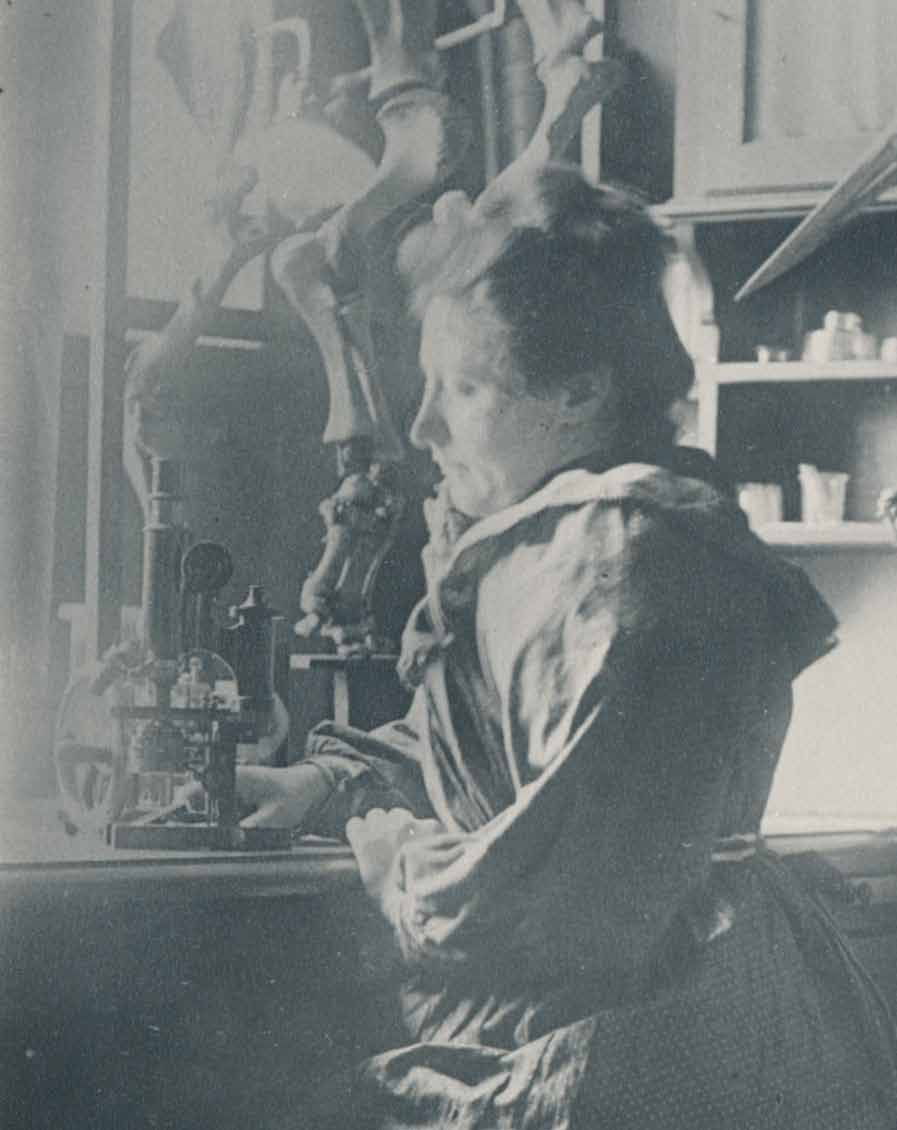
Source: Harvard Countway Library.

Source: National Library of Medicine.
Abbie Lathrop (USA, 1868 – 1918), breeder, and pioneer in research with rodent animal models
Many biomedical studies are carried out on mice because they are an animal model sufficiently similar to humans. Thus, experiments can be carried out on their tissues and cells – or even behavioral studies – that will serve as the basis for safe tests in humans—for example, a drug or a vaccine. By law and ethics, animal experiments are conducted when no other option exists. In addition, the smallest possible number of specimens is used, and a refined method seeks to minimize the pain and discomfort of the animals. The use of mice in research began with Abbie Lathrop (USA, 1868 – 1918).
As a rodent breeder, she knew how to identify and enhance the traits that made them more valuable, so she was improving the characteristics of these animals’ different lines – or families –. In 1902, geneticists William Ernest Castle and Clarence Cook Little were the first to commission mice from him. They were interested in working with small rodents because their fast life cycles made them ideal for analyzing genetics over several generations. Abbie Lathrop was an observant, methodical, and detail-oriented woman. Nowadays, people dedicated to breeding and maintaining animal lines for research are highly valued in the scientific field, since it is thanks to their work that studies are ethically responsible and reliable.


Mária Telkes (Hungary, 1900-1995), biophysicist, inventor of solar heating
In the 1940s, an architect, a sculptor, and a scientist set out to create a house that harnessed solar energy. Mária Telkes (Hungary, 1900-1995), who specialises in physical chemistry, designed the house’s solar heating system, which was based on the ability of a saline compound (sodium sulphate and decahydrate) to capture heat from windows and distribute it over the walls of the rooms. The system worked very well, but the salt declined after three years and Telkes was fired from the prestigious institution where she worked as a researcher. Not everything always has to go well.
The rest of Telkes’ solar inventions were successful and are still used today. The portable solar desalination plant he built for airline pilots during World War II is useful in areas without drinking water. Its solar oven, capable of reaching 205 degrees Celsius, is very similar to those used in developing countries. In 1980, Telkes helped develop and build the first home powered entirely by solar energy—this time, with more success. Currently, solar panels are found on many rooftops. We take it for granted that the sun’s energy is key to a more sustainable future, just as Mária Telkes thought almost 100 years ago, when she took her first steps in science.


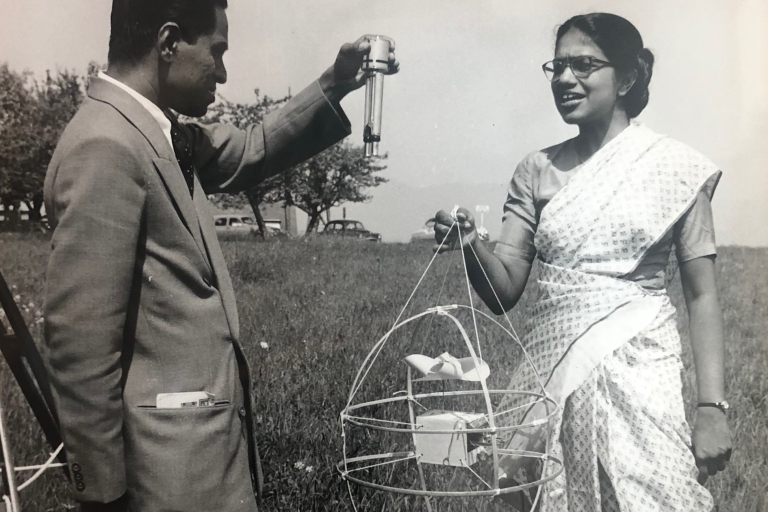
अन्ना मणि, Anna Mani (India, 1918-2001), standardized meteorological instruments in her country
Nowadays, a phone app warns you if it’s going to rain, if it’s windy, or if there will be too much radiation. In the mid-twentieth century, however, you had to consult a series of meteorological instruments directly: a rain gauge to measure precipitation in a given place and time, an anemometer to measure wind speed, and a hygrometer to know the degree of humidity in the air, among many others.
Meteorological instruments are more important than we can imagine. They are not only used to know when you can put on the Wellingtons. They are also used in public administration, astronomy, defense, and even the economy, as they help to forecast agricultural production in the medium and long term.
Imagine if a country as large, populous, and deeply dependent on its agriculture as India didn’t have enough meteorological instruments. This is precisely what happened until the 1950s when physicist Anna Mani (India, 1918-2001) set out to standardize and design high-precision instruments that could be manufactured in the country. He coordinated the creation of about 100 different measurement tools. In addition, she was a pioneer of energy sustainability. In the 1970s, he began a nationwide study to determine where solar or wind power plants would be most efficient. Today, about 30% of the energy generated in India comes from renewable sources.

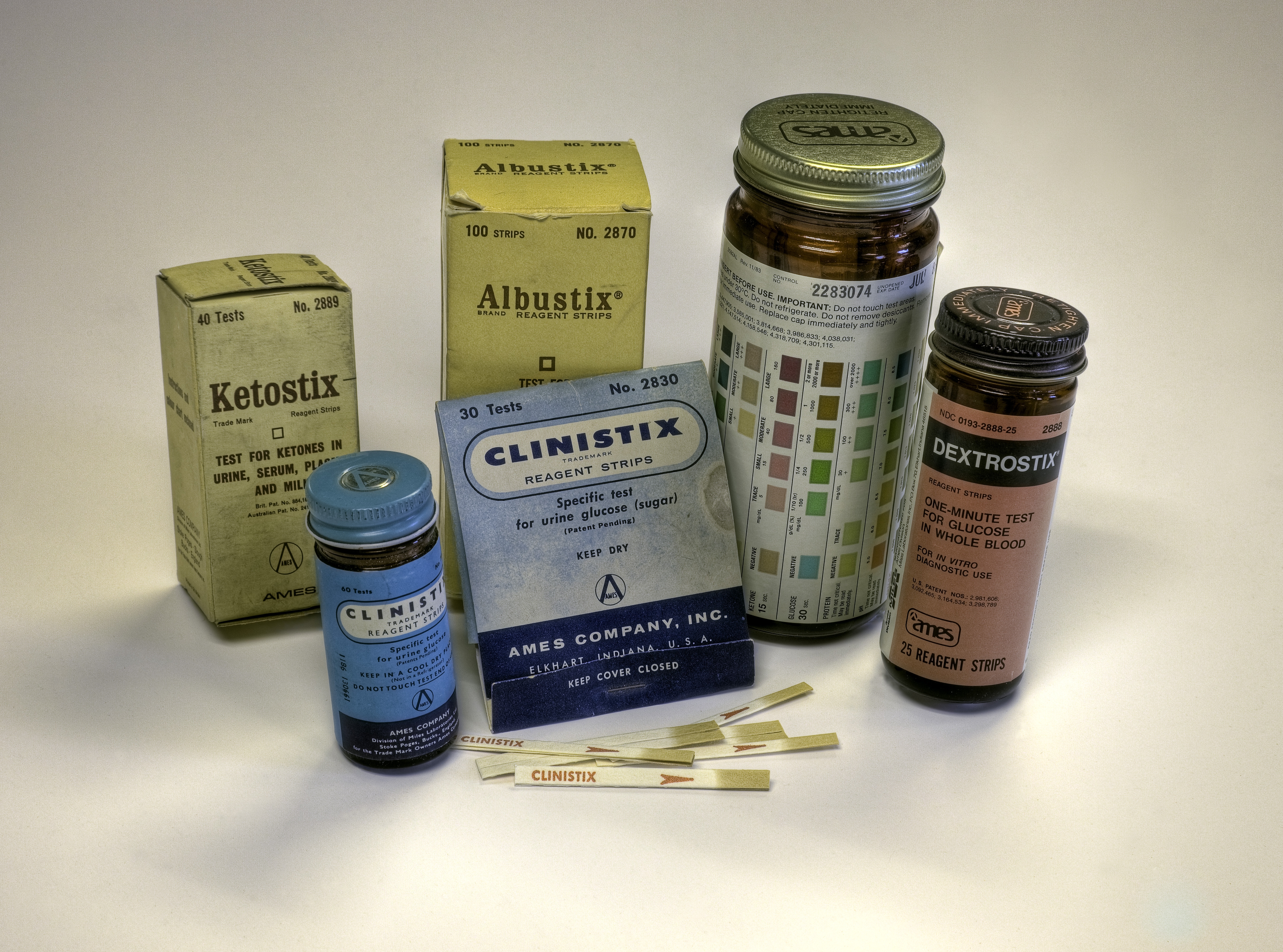
Helen Free (USA, 1923-2021), chemist and teacher, inventor of the rapid diabetes test
There are millions of diabetic people in the world. This disease can be diagnosed and treated almost autonomously by patients today, but this was not always the case. Helen Free (USA, 1923-2021) and her husband Alfred invented strips for the quick and easy chemical analysis of the presence of sugar in urine, which revolutionized the diagnosis and control of diabetes. The Free couple developed many more rapid tests capable of detecting blood, bilirubin, proteins, nitrites, leukocytes, or measuring urine acidity (pH). Instead of sending the samples to the lab, the analysis is as easy as putting a strip of paper in the sample and then comparing the color of the paper to a reference chart. It couldn’t be simpler.

Source: The New York Times.
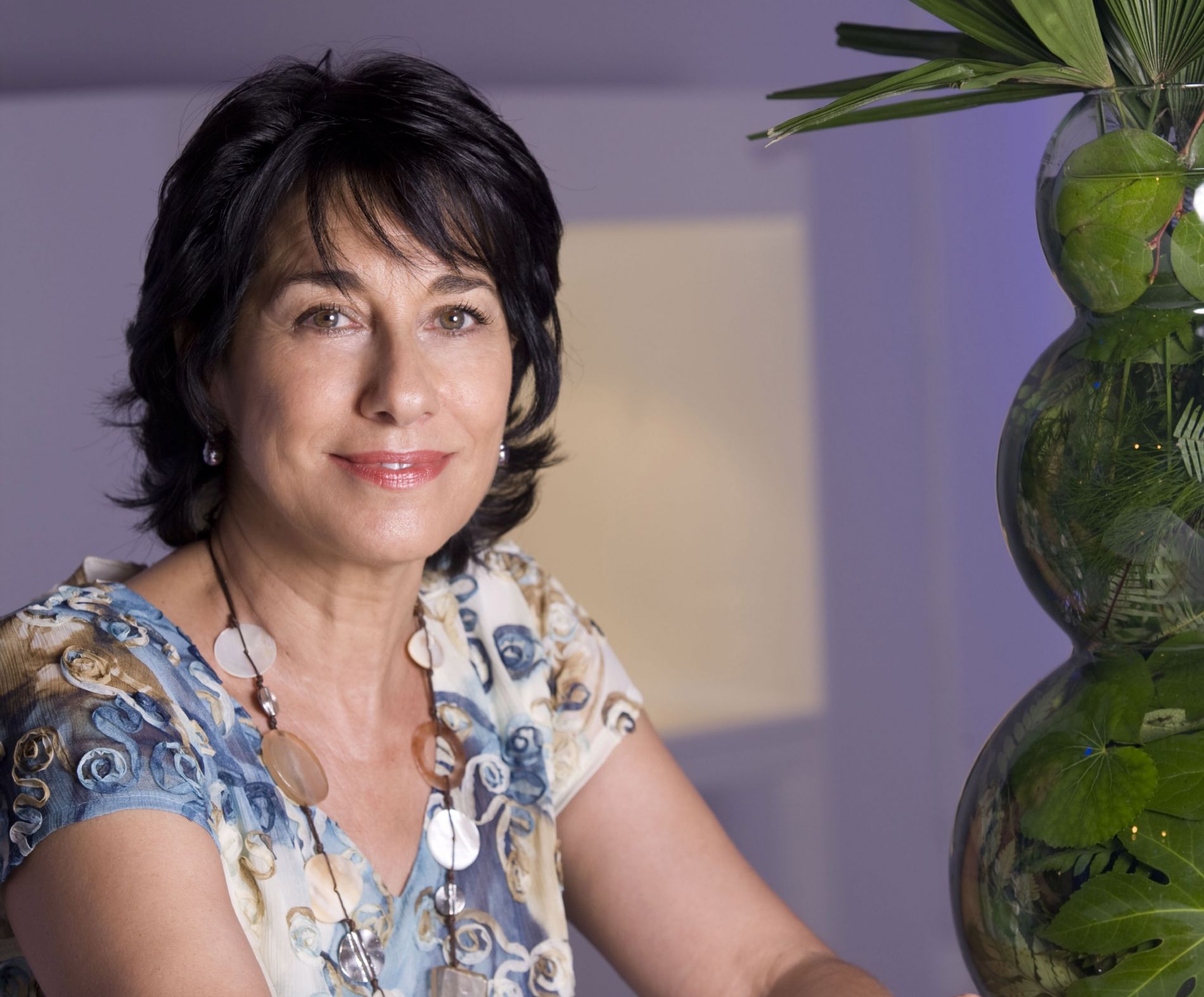
Flora de Pablo (Spain, b. 1952), physician, discoverer of proinsulin
You probably know that insulin is a hormone the body generates to control blood sugar levels. But before it becomes insulin, it has a different structure called proinsulin. Years ago, researchers thought that proinsulin was useless. However, the Spanish researcher Flora de Pablo (Spain, b. 1952) discovered that proinsulin has important functions during embryonic development. Her research has led to the development of new drugs and treatments. For example, proinsulin could be the key to treating retinitis pigmentosa, a genetic disease that causes blindness.
In 2001, Flora de Pablo co-founded the Association of Women Researchers and Technologists because she was concerned about the lack of recognition of women’s work in the scientific and technological fields. How many of the women we presented in this exhibition of #HerStoryofScience did you know? Without asking Google, could you say the names of ten important female scientists? We didn’t know that many ourselves. That’s why we encourage you to continue discovering women’s contributions. Perhaps, one day, we will have an exhibition about everything you have achieved!

Francisca Okeke (Nigeria, b. 1958) has studied the ionosphere to predict changes in the Earth’s magnetic field
‘Ionosphere’ is the name we give to a layer of the Earth’s atmosphere between 50 km and 1,000 km high. It is so called because it contains many charged particles of energy. A very interesting phenomenon occurs in the ionosphere, the equatorial electrojet, a current of electricity that runs through the planet from east to west, just above the magnetic equator. The electrojet is strongest at noon and is affected by the Sun and the Moon. The variations of the electrojet, in turn, affect our planet’s magnetic field. And what is the point of understanding this phenomenon? For almost everything.
Knowing the changes in the Earth’s magnetic field is very important because it helps us predict solar storms that can damage power grids and cause blackouts. The magnetic field also affects satellites and communications, such as television or the Internet. Magnetic measurements are essential for the navigation of planes and ships.
University of Nigeria professor Francisca Nneka Okeke (Nigeria, b. 1958) has studied the phenomenon of electrojetting for decades. Her research helps to understand how space, especially the Sun’s energy, influences the Earth. Her discoveries provide insights about climate change, and some clues about how to anticipate natural phenomena such as earthquakes and tsunamis.

Agnès Gruart i Massó (Spain, b. 1962), neuroscientist, expert in the physiology of memory and learning
Memory is not a drawer where our memories are kept and that we can open when we want to remember something. Memory is a process in which many nervous system circuits are involved. Neuroscientist Agnès Gruart (Spain, b. 1962) has studied how memory is generated for many decades. Her research is useful also in understanding how we lose memory, for example, due to Alzheimer’s disease. In 2006, Gruart designed an experiment in mice that demonstrated, for the first time, how the connections between hippocampal cells change while learning and that blocking these changes, for example with electrical currents that hinder neurons, prevents learning new things.
In 2001, Agnès Gruart co-founded the Association of Women Researchers and Technologists because she wanted women in these fields to have the same opportunities as men. For this same reason, the #HerStoryofScience exhibition you are visiting wants to help your hippocampal neurons remember that society needs diverse people to move forward. Don’t forget that whoever you are can also contribute to a better world.


Ann Lambrechts (born 1971), engineer, inventor of steel fiber concrete
Concrete is commonly used in construction because it’s strong and can withstand the compression of large structures, such as buildings and walls. But, if it is used horizontally, such as to make a roof, it needs extra reinforcement. Reinforced concrete, in which concrete’s relatively low tensile strength and ductility are compensated for by the inclusion of steel rods, has been used for decades. But manufacturing ferroconcrete requires a lot of material and work.
In the year 2000, Ann Lambrechts (Belgium, b. 1971) patented very small steel forks, the size of a clip, curved at the tips and straight in the middle, which, mixed with the concrete, create a three-dimensional reinforcement mesh without major complications. The Oceanogràfic de València, which has a curved roof of very thin concrete, was built thanks to her invention.


In collaboration with:

This project has received funding from the European Union’s Horizon 2020 research and innovation programme under grant agreement No 101035817.


